
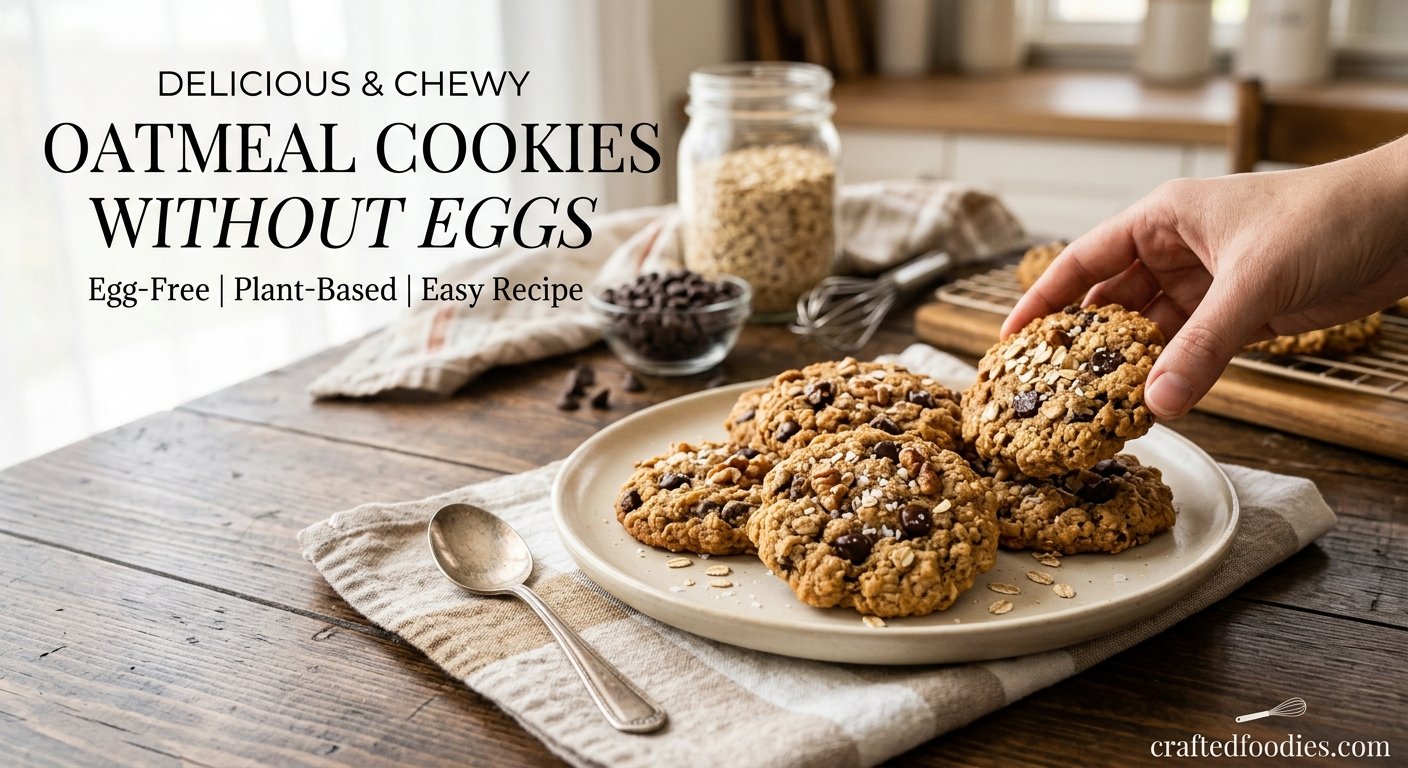
Oatmeal Cookies Without Eggs: Easy, Chewy, and Delicious

If you love homemade cookies but have run out of eggs, you can still make a delicious batch of oatmeal cookies with simple pantry ingredients. These oatmeal cookies without eggs are soft in the center, slightly crisp around the edges, and filled with the comforting flavor of oats, butter, and brown sugar. They are easy to prepare, require no complicated baking techniques, and are perfect for an afternoon snack or a sweet treat after dinner.
One of the best things about this eggless oatmeal cookie recipe is that you do not need special ingredients or an expensive egg substitute. A little milk helps bring the dough together, while butter and sugar provide flavor and texture. The oats give every cookie a satisfying chew, making these homemade treats a wonderful alternative to traditional cookies.
Whether you are avoiding eggs, baking for someone with an egg allergy, or simply looking for a reliable cookie recipe using ingredients you already have, this recipe is worth trying. You can also customize the cookies with chocolate chips, raisins, cinnamon, or chopped nuts.
Let’s look at how to make oatmeal cookies without eggs that taste delicious and turn out beautifully every time.
Why You Will Love These Oatmeal Cookies Without Eggs
There are plenty of reasons to add this recipe to your regular baking routine.
1. No eggs required
You can make these cookies without eggs or commercial egg replacers. The combination of butter, sugar, and a small amount of milk helps create a workable cookie dough.
2. Simple pantry ingredients
Most of the ingredients are common baking staples. You may already have everything you need in your kitchen.
3. Soft and chewy texture
Rolled oats create a hearty texture, while brown sugar helps keep the cookies moist and chewy.
4. Easy to customize
Add raisins for a classic oatmeal cookie, chocolate chips for extra sweetness, or cinnamon for a warm, comforting flavor.
5. Beginner-friendly recipe
You do not need a mixer, special equipment, or advanced baking skills. A mixing bowl, spoon, baking tray, and oven are enough.
6. Perfect for small snacks
These cookies are easy to pack in lunchboxes, serve with tea or coffee, or enjoy with a glass of milk.
Ingredients for Oatmeal Cookies Without Eggs
You only need a handful of basic ingredients to make these delicious eggless oatmeal cookies.
Ingredients
- 1 cup rolled oats
- 3/4 cup all-purpose flour
- 1/2 cup unsalted butter, softened
- 1/2 cup brown sugar, packed
- 2 tablespoons granulated sugar
- 2 tablespoons milk
- 1/2 teaspoon vanilla extract
- 1/2 teaspoon ground cinnamon
- 1/2 teaspoon baking soda
- 1/4 teaspoon salt
- 1/3 cup raisins or chocolate chips, optional
These measurements make approximately 12 to 16 cookies, depending on their size.
Choosing the Right Oats
Old-fashioned rolled oats are the best choice for this recipe. They provide a pleasant chew and help the cookies maintain their classic oatmeal texture.
Quick oats can also work, although the finished cookies may be softer and less textured. Steel-cut oats are not recommended because they remain too firm and require a different cooking method.
Why Use Brown Sugar?
Brown sugar adds a mild caramel flavor and helps the cookies stay soft. The small amount of granulated sugar balances the moisture while encouraging the edges to become lightly crisp.
If you do not have brown sugar, you can use granulated sugar instead. However, the cookies may have a slightly different flavor and texture.
What Does the Milk Do?
Because this recipe does not contain eggs, a little milk helps moisten the dough and brings the ingredients together. Start with the recommended amount rather than adding too much at once.
If the dough seems unusually dry, add another teaspoon of milk. The goal is a soft dough that holds its shape when rolled into balls.
How to Make Oatmeal Cookies Without Eggs
Follow these simple steps to prepare a batch of homemade eggless oatmeal cookies.
Step 1: Preheat the Oven
Preheat your oven to 350°F (175°C). Line a baking sheet with parchment paper to prevent the cookies from sticking.
If you do not have parchment paper, lightly grease the baking sheet. Parchment is still the better option because it makes cleanup easier and helps the cookies bake evenly.
Step 2: Mix the Dry Ingredients
In a medium bowl, combine the all-purpose flour, rolled oats, baking soda, cinnamon, and salt.
Stir everything together until the ingredients are evenly distributed. Mixing the dry ingredients first helps prevent pockets of baking soda or cinnamon from forming in the dough.
Set the bowl aside while you prepare the butter and sugar.
Step 3: Cream the Butter and Sugars
Place the softened butter, brown sugar, and granulated sugar in a separate bowl.
Use a spoon, spatula, or hand mixer to mix them until the mixture looks creamy and well combined. You do not need to beat it for a long time, but the butter should be soft enough to mix smoothly.
Add the vanilla extract and milk, then stir again.
The mixture may look slightly different from traditional cookie dough because it does not contain eggs. That is completely normal.
Step 4: Combine the Wet and Dry Ingredients
Gradually add the dry ingredients to the butter mixture. Stir until everything comes together into a thick cookie dough.
If you want to include raisins or chocolate chips, fold them in at this stage.
Avoid overmixing the dough. Once there are no visible streaks of dry flour, stop stirring. Overmixing can make the cookies tougher than necessary.
If the dough feels too sticky to handle, refrigerate it for 20 to 30 minutes. Chilling also helps reduce excessive spreading during baking.
Step 5: Shape the Cookies
Scoop approximately 1 to 1 1/2 tablespoons of dough for each cookie. Roll the dough gently between your hands to form small balls.
Place the dough balls on the prepared baking sheet, leaving about 2 inches between them.
Gently flatten each ball with your fingers or the back of a spoon. These eggless oatmeal cookies may not spread exactly like cookies made with eggs, so flattening them slightly helps create an even shape.
Step 6: Bake Until the Edges Are Golden
Bake the cookies for approximately 10 to 13 minutes.
The edges should look lightly golden, while the centers may still appear a little soft. Do not wait until the entire cookie looks firm, because the cookies will continue to set as they cool.
Smaller cookies may bake faster, while larger cookies may need another minute or two.
Step 7: Let the Cookies Cool
Remove the baking sheet from the oven and allow the cookies to rest for about 5 minutes.
They will be delicate while hot, so avoid moving them immediately. Once they have firmed up, transfer them to a wire rack to cool completely.
Enjoy them slightly warm for a soft, comforting treat, or let them cool fully for a firmer texture.
Tips for Soft and Chewy Eggless Oatmeal Cookies
Making oatmeal cookies without eggs is straightforward, but a few small details can make a noticeable difference.
Measure the Flour Correctly
Too much flour can make the cookies dry or crumbly. For the most consistent results, use a kitchen scale if possible.
If measuring with cups, spoon the flour into the measuring cup and level the top with a straight edge. Avoid packing the flour into the cup.
Use Softened Butter
Butter that is too cold will be difficult to combine with the sugar. On the other hand, melted butter can cause the cookies to spread more than expected.
Let the butter soften at room temperature until it gives slightly when pressed but still holds its shape.
Do Not Add Too Much Milk
It may be tempting to add extra milk if the dough looks thick. However, oatmeal cookie dough should be fairly firm.
Too much liquid can make the cookies spread unevenly or become cakey. Add extra milk only a teaspoon at a time when the dough is genuinely dry.
Chill the Dough if Necessary
If your kitchen is warm or the butter has become very soft, refrigerating the dough for 20 to 30 minutes can help.
Chilling is particularly useful if you want thicker cookies with less spreading.
Remove the Cookies Before They Look Completely Done
One common mistake is leaving oatmeal cookies in the oven until they feel hard. This can produce dry, crunchy cookies instead of soft, chewy ones.
Look for lightly golden edges and centers that are just beginning to set.
Let Them Cool on the Baking Sheet
Eggless cookies can be more fragile immediately after baking. Giving them several minutes on the tray allows the structure to firm up without breaking.
The Best Egg Substitutes for Oatmeal Cookies
Although this recipe uses milk and does not require a dedicated egg substitute, there are other options if you want to experiment.
Mashed Banana
Use approximately 1/4 cup mashed ripe banana in place of one egg in recipes designed for an egg substitute. Banana adds moisture and helps bind ingredients, but it also contributes a noticeable fruity flavor.
This option works especially well with cinnamon, raisins, and walnuts.
Unsweetened Applesauce
About 1/4 cup unsweetened applesauce can replace one egg in many cookie recipes. It adds moisture and may produce a softer texture.
Because applesauce adds liquid, you may need to adjust the other ingredients slightly.
Ground Flaxseed
Mix 1 tablespoon ground flaxseed with 3 tablespoons water and let it rest for approximately 5 to 10 minutes. The mixture becomes gel-like and can help bind cookie dough.
Flaxseed has a mild nutty flavor that pairs nicely with oats.
Important: These substitutions are alternatives for adapting other recipes. You do not need to add any of them to the oatmeal cookie recipe above.
Delicious Variations to Try
One of the best features of homemade oatmeal cookies is how easily you can change the flavor.
Oatmeal Raisin Cookies Without Eggs
For a classic version, add 1/3 cup raisins to the dough. You can soak particularly dry raisins in warm water for a few minutes, then drain and dry them thoroughly before adding them.
A little extra cinnamon makes this variation especially comforting.
Chocolate Chip Oatmeal Cookies
Replace the raisins with chocolate chips or use a mixture of both.
Semi-sweet chocolate chips balance the sweetness of the dough, while dark chocolate creates a richer flavor. Mini chocolate chips are another good option because they distribute evenly throughout the cookies.
Cinnamon Oatmeal Cookies
Increase the cinnamon to 3/4 teaspoon for a stronger spice flavor. You can also add a small pinch of nutmeg.
These cookies pair beautifully with hot tea, coffee, or warm milk.
Oatmeal Cookies with Nuts
Add 1/4 cup chopped walnuts, pecans, or almonds for extra crunch.
Toast the nuts briefly in a dry skillet before adding them if you want a deeper flavor. Let them cool first so they do not soften the butter in the dough.
Coconut Oatmeal Cookies
Mix in 1/4 cup unsweetened shredded coconut. Coconut adds texture and a mild sweetness that works well with vanilla and cinnamon.
If the dough becomes too dry because of the additional ingredients, add a teaspoon of milk only if needed.
Healthier-Style Oatmeal Cookies
For a less-sweet version, reduce the granulated sugar slightly and use dark chocolate or unsweetened dried fruit.
You can also replace part of the all-purpose flour with whole-wheat flour. Keep in mind that whole-wheat flour may produce a denser cookie, and reducing sugar can change spreading and browning.
Oats provide fiber, but these cookies still contain butter and sugar. They are best enjoyed as part of a balanced eating pattern rather than treated as a low-calorie food.
Common Mistakes to Avoid
Making the Dough Too Wet
Adding too much milk can result in cookies that spread excessively or have a soft, cake-like texture. Follow the measurements and add extra liquid only when necessary.
Using the Wrong Type of Oats
Steel-cut oats are too firm for this quick-baking recipe. Choose rolled oats for the best combination of chewiness and structure.
Baking at the Wrong Temperature
An oven that is too hot can brown the edges before the centers cook properly. An oven that is too cool may cause the cookies to spread and dry out before developing a good texture.
An oven thermometer can help if your oven temperature is inconsistent.
Overbaking the Cookies
The cookies may look slightly underdone in the center when you first remove them. This is normal. They will continue to firm up while cooling.
Skipping the Cooling Time
Moving the cookies too early can cause them to crack or fall apart. Allow at least 5 minutes of cooling on the baking sheet before transferring them.
How to Store Oatmeal Cookies Without Eggs
Proper storage helps keep homemade cookies fresh and enjoyable.
At room temperature: Store completely cooled cookies in an airtight container for approximately 4 to 5 days. Keep them away from direct sunlight and sources of heat.
In the refrigerator: Refrigeration is generally unnecessary for these cookies if they are fully baked and stored properly. However, follow appropriate food-safety guidance if you add perishable fillings or toppings.
In the freezer: Place the cooled cookies in a freezer-safe container or bag, separating layers with parchment paper. Freeze for up to 2 to 3 months for best quality.
When you want to enjoy them, allow the cookies to thaw at room temperature. You can also warm one in the microwave for a few seconds if you prefer a softer texture.
Can You Freeze the Cookie Dough?
Yes. Shape the dough into individual balls and place them on a lined tray. Freeze until firm, then transfer them to a freezer-safe bag.
For best quality, use the frozen dough within about 2 to 3 months.
You can bake the dough balls from frozen, but they may require a few extra minutes in the oven. Check them frequently and use the golden edges as your main visual guide.
What to Serve with Eggless Oatmeal Cookies
These cookies are delicious on their own, but they also pair well with several everyday drinks and snacks.
- Milk: A classic choice that complements the oats and cinnamon.
- Coffee: The slightly bitter flavor of coffee balances the sweetness of the cookies.
- Tea: Serve them with black tea, green tea, or a spiced milk tea.
- Fresh fruit: Apples, bananas, and berries make a refreshing addition to a snack plate.
- Yogurt: Plain yogurt can balance the sweetness when served alongside a cookie.
For a simple dessert, sandwich a small scoop of your favorite ice cream between two completely cooled cookies. If you need the dessert to be egg-free, check the ice cream label as well.
Frequently Asked Questions
Can You Make Oatmeal Cookies Without Eggs?
Yes. You can make oatmeal cookies without eggs using butter, sugar, oats, flour, and a small amount of milk. These ingredients create a dough that bakes into soft, chewy cookies without requiring an egg substitute.
Why Are My Eggless Oatmeal Cookies Falling Apart?
The dough may contain too much flour, too little moisture, or insufficient binding. The cookies may also have been moved before cooling.
Measure the flour carefully, add milk gradually if the dough is too dry, and let the cookies rest on the baking sheet for at least 5 minutes after baking.
Can I Make These Cookies Without a Mixer?
Absolutely. A sturdy spoon or spatula works well for mixing the softened butter and sugar. You may need a little extra effort to combine the ingredients, but an electric mixer is not essential.
Can I Use Quick Oats Instead of Rolled Oats?
Yes. Quick oats generally work in this recipe, but the cookies may have a softer and less textured consistency. Rolled oats are the better choice if you prefer a traditional chewy oatmeal cookie.
Can I Make Oatmeal Cookies Without Eggs and Butter?
Yes, but you will need to replace the butter with a suitable alternative, such as a plant-based baking stick. Some liquid oils may work, although they can change the flavor, spread, and texture.
For the most reliable results, choose a baking substitute designed to replace butter in cookies rather than assuming every oil works in the same amount.
Are Oatmeal Cookies Without Eggs Vegan?
Not automatically. This recipe contains butter and milk, which are animal-derived ingredients.
To make a vegan version, use plant-based butter and an unsweetened plant-based milk. Also check that your chocolate chips and other additions are vegan-friendly.
How Do I Know When the Cookies Are Done?
The edges should be lightly golden, and the centers should look set around the outside but remain slightly soft. Most batches take approximately 10 to 13 minutes at 350°F (175°C).
Avoid waiting until the cookies become completely firm in the oven.
Can I Make the Dough Ahead of Time?
Yes. Cover the dough and refrigerate it for up to about 24 hours for convenience and best quality. Let it sit briefly at room temperature if it becomes too firm to scoop.
You may need to adjust the baking time slightly depending on how cold the dough is.
Can I Make Gluten-Free Oatmeal Cookies Without Eggs?
Yes, but you will need certified gluten-free oats and a suitable gluten-free flour blend. Use a blend intended for baking because different gluten-free flours absorb liquid differently.
Check every ingredient label for cross-contact warnings if the cookies are being prepared for someone with celiac disease or a serious allergy.
Can I Reduce the Sugar?
You can experiment with reducing the sugar modestly, but sugar contributes more than sweetness. It also affects moisture, browning, spreading, and texture.
Reducing it too much may result in drier or more cake-like cookies.
Recipe Summary: Oatmeal Cookies Without Eggs
Prep time: 10 minutes
Chilling time: 20–30 minutes, optional
Cook time: 10–13 minutes
Total time: Approximately 25–55 minutes, depending on chilling
Yield: 12–16 cookies
Oven temperature: 350°F (175°C)
Quick Instructions
- Preheat the oven to 350°F (175°C) and line a baking sheet with parchment paper.
- Mix the oats, flour, baking soda, cinnamon, and salt in a bowl.
- In another bowl, combine softened butter, brown sugar, and granulated sugar until creamy.
- Stir in the milk and vanilla extract.
- Add the dry ingredients and mix until a thick dough forms.
- Fold in raisins or chocolate chips if desired.
- Shape the dough into balls, place them on the baking sheet, and flatten slightly.
- Bake for 10–13 minutes, until the edges are lightly golden.
- Cool on the baking sheet for 5 minutes before transferring to a wire rack.
Final Thoughts
These oatmeal cookies without eggs prove that you do not need a complicated recipe to make a delicious homemade treat. With rolled oats, butter, sugar, flour, and a little milk, you can prepare cookies that are soft in the middle, lightly crisp around the edges, and full of comforting flavor.
The recipe is flexible enough for everyday baking, whether you prefer classic oatmeal raisin cookies, chocolate chip oatmeal cookies, or a version with cinnamon and chopped nuts. You can also prepare the dough ahead of time or freeze individual portions for a quick homemade dessert whenever a craving strikes.
For the best results, measure your ingredients carefully, avoid adding too much milk, and remove the cookies from the oven while the centers are still slightly soft. Once cooled, they will develop a satisfying texture that makes them perfect for sharing with family and friends.
If you are looking for an easy, dependable way to make oatmeal cookies without eggs, save this recipe and give it a try. A few simple ingredients and a short baking time are all you need to enjoy a fresh batch of homemade cookies.
SEO Title: Oatmeal Cookies Without Eggs – Easy, Soft and Chewy Recipe
Meta Description: Make delicious oatmeal cookies without eggs using simple pantry ingredients. These easy eggless oatmeal cookies are soft, chewy, customizable, and perfect for snacking.
Suggested URL Slug: oatmeal-cookies-without-eggs
Primary Keyword: Oatmeal cookies without eggs
Related Keywords:
- Eggless oatmeal cookies
- Easy oatmeal cookies without eggs
- Soft oatmeal cookies without eggs
- Chewy eggless oatmeal cookies
- Oatmeal raisin cookies without eggs
- Homemade egg-free oatmeal cookies
- Oatmeal cookies without egg substitute






4 Comments